Food tracking sounds useful until you begin doing it.
You open an app, search for dal, choose between several confusing entries, estimate the quantity, add rice separately, search for sabzi, guess how much oil was used and repeat the same process at the next meal. By dinner, improving your health feels less like progress and more like unpaid data entry.
This problem is worse with Indian food. Meals often contain several dishes, recipes vary from one household to another, and portions are measured in katoris, ladles, rotis and instinct rather than exact grams.
A smarter AI food tracker can reduce that friction. It may not make every estimate perfect, but it can make logging faster, simpler and far more realistic for the way Indians eat.
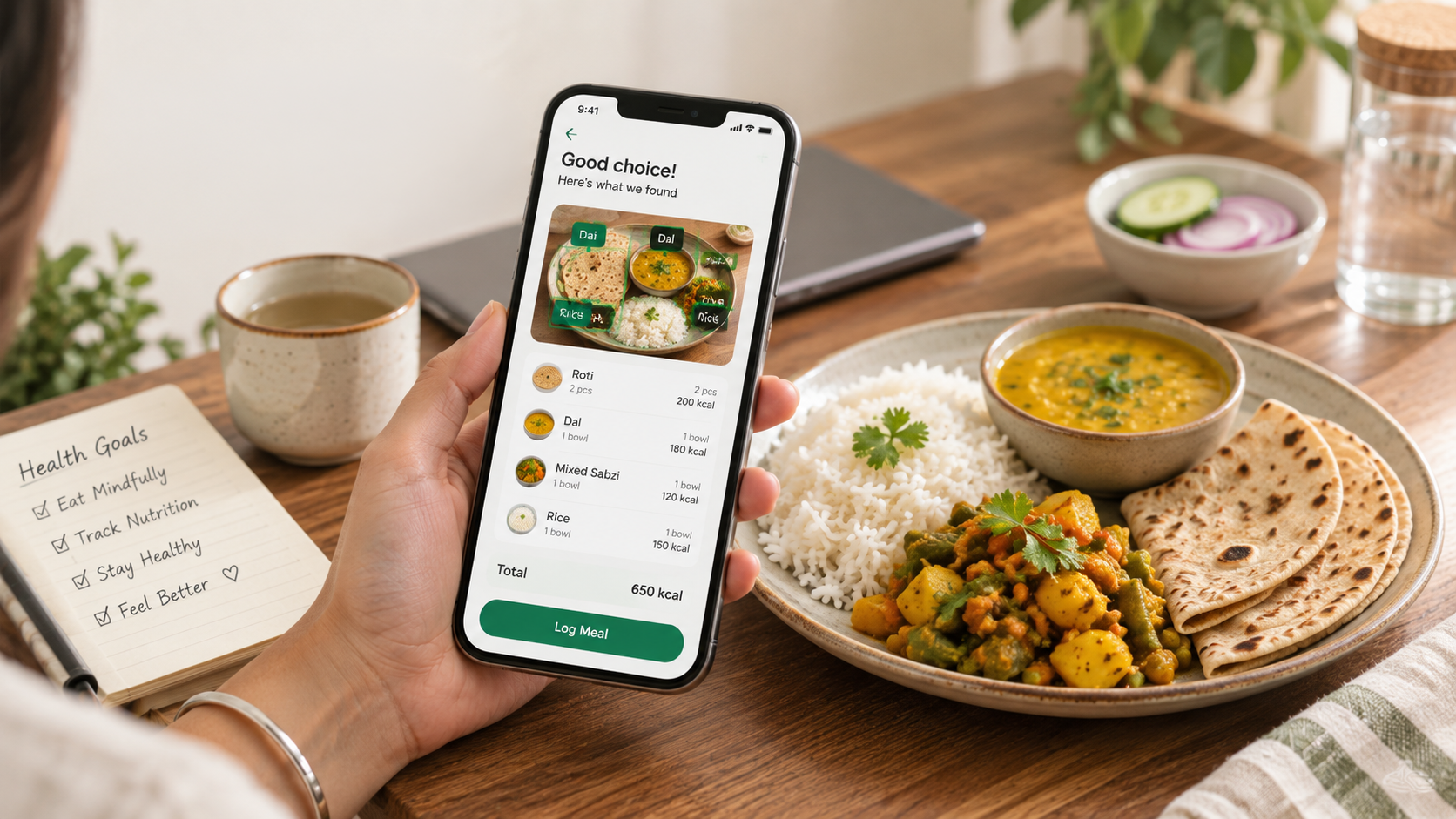
A typical Indian lunch may include roti, rice, dal, sabzi, curd, pickle and salad. In a conventional calorie tracking app, each item may need to be searched, selected and adjusted separately.
Mixed dishes create even more confusion. The calories in biryani, khichdi, poha, pav bhaji, dosa-sambar or paneer gravy depend on ingredients, oil, serving size and preparation style.
The result is predictable: users start with discipline, then gradually stop logging because the process demands too much attention.
The best tracking tool is not the one with the largest theoretical database. It is the one people can realistically continue using for months.
AI can shorten the distance between eating a meal and understanding it.
Instead of manually typing every food item, a user can photograph or describe the meal. An AI food tracker can help identify visible foods, estimate portions and organise the plate into calories and nutrition information.
That does not mean AI can see everything. Hidden oil, ghee, sugar, butter, cream and recipe differences may still require manual correction. No app can look at a bowl of dal and know exactly how much oil disappeared into the tadka.
But AI does not need to be magically perfect to be useful. If it can reduce ten manual steps to two or three, it makes food logging easier to maintain.
A capable food tracking app can also become more useful when users save familiar meals, repeat similar portions or log routine breakfasts and lunches over time.
Nutrition platforms often compete over database size and calorie precision. But those numbers deliver very little value when users abandon the process after four days.
A reasonably estimated meal logged consistently can reveal patterns such as:
This is where Nutriiya becomes relevant. Indian users do not simply need more food names inside a global database. They need a system that understands mixed plates, regional dishes, home cooking and familiar portion formats.
A useful nutrition tracking app should turn food records into understandable feedback rather than leave users staring at a dashboard full of numbers.
AI can simplify the process, but a few habits make tracking more practical:
These steps reduce frustration and make food records more meaningful.
Nutriiya makes Indian food tracking less manual by helping users log meals, estimate calories, understand protein, carbohydrates and fats and review recurring eating patterns.
That gives it a stronger role than being another calorie counter app. Its value lies in combining convenience with Indian food context.
For someone eating dal-rice, roti-sabzi, khichdi, dosa-sambar or a mixed home-cooked plate, the important question is not whether every estimate is mathematically exact. It is whether the tool helps the user understand what they eat and make better decisions repeatedly.
The right calorie tracking app should reduce confusion, highlight useful patterns and make nutrition easier to act on without creating anxiety around every bite.
People are more likely to track food when the process fits naturally into their lives.
For Indian users, that means recognising mixed meals, reducing manual entry, allowing practical corrections and focusing on patterns that influence progress. By combining AI-led meal understanding with Indian food relevance, Nutriiya can make calorie and nutrition tracking easier to maintain.
Because eating the meal should take longer than entering it into the app.
Share this blog on: