Keeping track of what you eat sounds simple until your day gets busy.
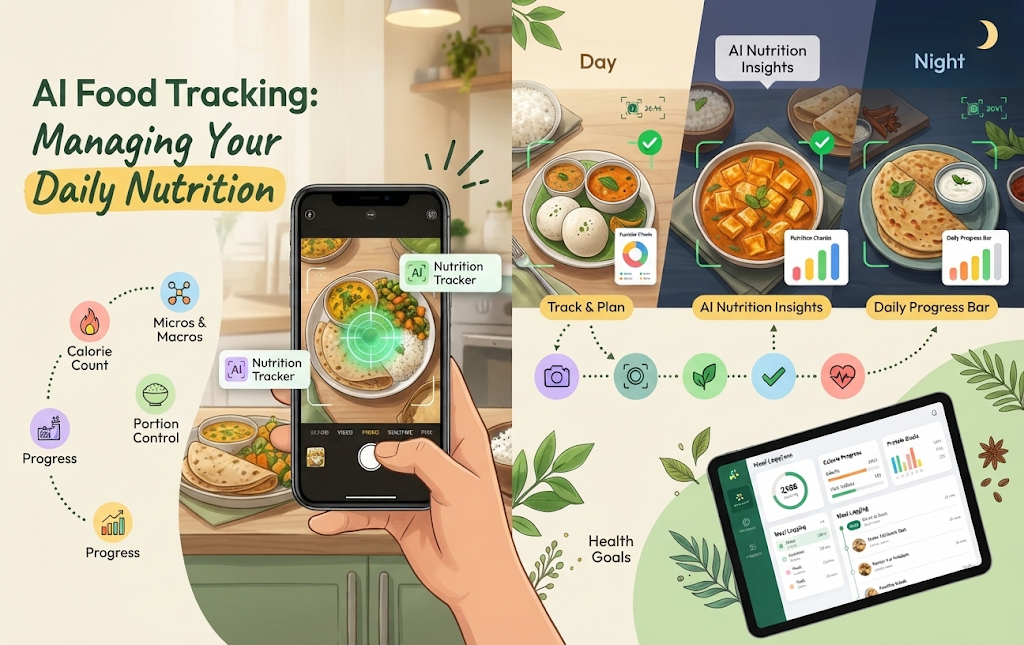
This is where AI food tracking can help. A daily nutrition tracker makes it easier to record meals, understand your eating habits, and keep an eye on your nutritional intake without manually noting every ingredient.
With features such as food recognition, calorie estimates, and meal logging, managing your daily nutrition becomes more convenient.
Knowing what you eat gives you a better understanding of your food habits. It can help you notice whether you're eating enough protein, getting adequate fibre, or consuming more calories than you realise.
When you track daily calorie intake, you get a clearer picture of your energy consumption throughout the day. This information can be useful if you're trying to manage your weight, improve your eating habits, or simply become more mindful of your meals.
A daily calorie intake tracker also helps you look beyond individual meals. You can observe patterns over time and adjust based on your routine and nutritional needs.
Traditional food tracking often involves searching for individual ingredients, checking serving sizes, and entering nutritional information manually. It works, but it can become time-consuming, especially when you're eating homemade meals.
An AI meal scanner can simplify this process by recognising food from an image and providing an estimated nutritional breakdown. Instead of searching through long food databases, you can get a starting point for logging your meal.
AI-powered tracking can also help with:
Faster meal logging: Record meals without manually entering every ingredient.
Calorie estimates: Get an approximate idea of the calories in your food.
Nutritional insights: Understand the balance of protein, carbohydrates, fats, and other nutrients.
Consistent tracking: Make it easier to maintain a food log throughout the day.
AI estimates aren't always exact. Homemade recipes, cooking methods, and portion sizes can affect nutritional values, so it's useful to review and adjust entries where needed.
Not every food tracking app offers the same experience. If you're choosing one, look for features that make tracking practical enough to fit into your everyday routine.
A useful calorie tracking app should offer:
Easy meal logging: A simple way to record meals and snacks.
Food recognition: An AI meal scanner that can identify a variety of foods.
Nutritional breakdowns: Information beyond just calorie counts.
Food variety: Recognition of regional dishes and homemade meals.
Progress tracking: A way to review your eating patterns over time.
A good nutrition analysis app should also make the information easy to understand. After all, tracking your meals is more useful when you know what to do with the information.
Indian meals can be particularly tricky to log because recipes and portions vary from one household to another. A bowl of dal, for instance, can have different nutritional values depending on the ingredients, quantity of oil, and preparation method.
The same goes for dishes such as poha, dosa, biryani, and homemade sabzis.
This is why food recognition matters. An AI-powered meal logging app that recognises Indian dishes can make everyday tracking more convenient. You can record familiar meals and get nutritional estimates without having to search for every ingredient separately.
Nutriiya helps simplify everyday food tracking with features such as its AI food scanner and voice logging. It recognises a wide range of Indian dishes, making it easier to log familiar meals and understand their estimated calorie intake.
If you've been meaning to pay more attention to what you eat, using a daily nutrition tracker can be a practical place to start. Nutriiya helps make that process easier, one meal at a time.
The goal is to understand your eating habits better and make choices that fit your everyday routine.
An AI food tracking app uses artificial intelligence to recognise meals, estimate calorie intake, and provide nutritional information. Some apps also offer food scanning and voice logging to make meal tracking easier.
You can use a daily calorie intake tracker to record your meals, snacks, and beverages throughout the day. It helps you estimate your calorie consumption and understand your eating patterns over time.
AI meal scanners can provide useful calorie and nutritional estimates, but accuracy depends on portion sizes, ingredients, and cooking methods. Homemade meals may require manual adjustments for better estimates.
Look for easy meal logging, food recognition, calorie estimates, and nutritional breakdowns. A good food tracking app should also recognise the foods you eat regularly and make it simple to review your progress.
Yes. An AI-powered calorie tracking app can help you understand your food habits, monitor calorie intake, and identify patterns. This information can support more informed eating choices alongside a balanced diet and regular physical activity.
Share this blog on: